Agentic Storefronts: The Future of Autonomous Retail Experiences
How AI agents are turning static stores into autonomous shopping powerhouses
NEXT-GEN RETAIL
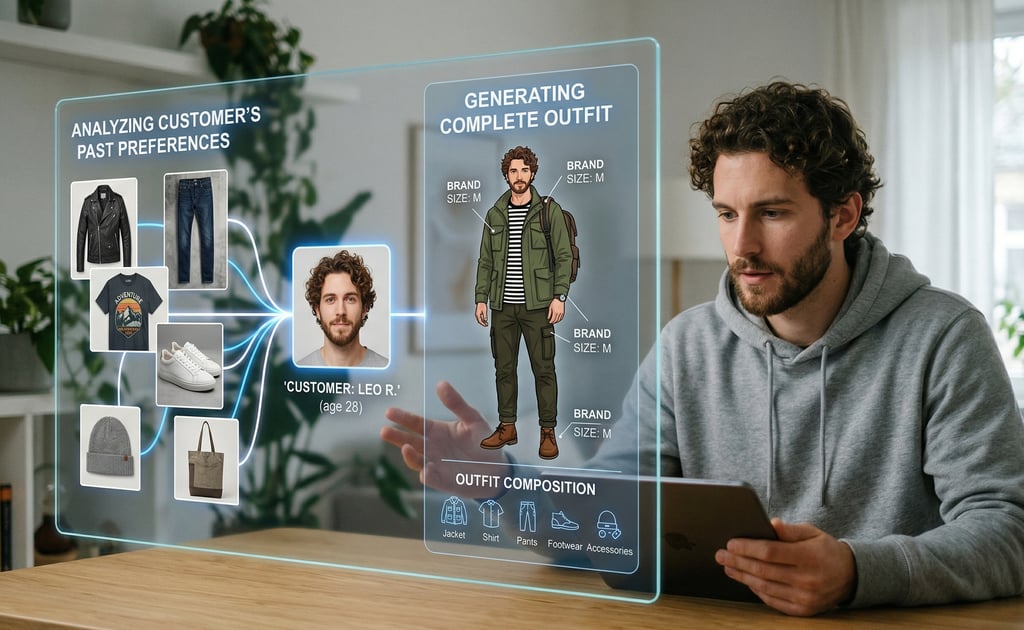
For decades, we’ve told retailers that the future is “personal”. We built recommendation engines, optimized search bars, and deployed chatbots that could - if you asked very nicely - find a tracking number.
But as we cross into 2026, that era of passive e-commerce is ending. We are moving from storefronts that wait for a click to Agentic Storefronts that act on behalf of the business and the consumer.
What is an Agentic Storefront?
In simple terms, an agentic storefront is a retail environment powered by AI agents - autonomous software entities capable of reasoning, planning, and executing complex tasks without constant human prompts.
Unlike a traditional website, which is essentially a digital catalog, an agentic storefront is a living, breathing concierge. It doesn't just show a product; it understands the shopper's intent, negotiates value, and can even handle the "messy middle" of commerce - like coordinating a complex gift delivery or managing a multi-item return - entirely on its own.
Beyond the Chatbot: Why This is Different
Traditional AI in retail was reactive. You asked a question; it fetched an answer from a database.
Agentic storefronts are proactive. They use "Reasoning Models" to handle "Zero-Click Commerce". Instead of a customer spending twenty minutes filtering for "waterproof hiking boots under $150," a customer’s own personal AI agent might communicate directly with the store’s Brand Agent. They "talk" via standardized protocols, confirm specs, check real-time inventory, and present the shopper with a finalized deal.
Why This Matters Now
The shift isn't just a tech trend; it’s a response to a massive shift in consumer behavior. By early 2026, data from Salesforce and IDC indicates that nearly 25% of digital purchases are now AI-assisted. Furthermore, traffic from AI "answer engines" to retail sites has surged by over 1,200% year-over-year, while traditional search traffic has begun a steady decline.
Retailers are no longer just competing for "eyeballs" on a screen; they are competing for "slots" in an AI agent’s recommendation list. If your storefront isn't "agent-ready," you are effectively invisible to the fastest-growing segment of shoppers.
Key Benefits: The Bottom Line
For brand decision-makers, the impact of going agentic is measurable and immediate:
Hyper-Conversion at Scale: Early adopters of agentic commerce systems are seeing a 15–30% lift in conversion rates. Why? Because the agent removes the "friction of choice”.
Operational Autonomy: These systems don't just talk to customers; they talk to your backend. An agent can see a shipping delay, proactively message the customer with a discount, and re-order the stock - all before your floor manager has had their morning coffee.
Dynamic Margin Protection: Instead of "blanket discounts," agents use real-time market signals to offer targeted incentives only to the shoppers who need them to convert, preserving your margins.
Real-World Use Cases
The Virtual Style Concierge: Brands like Sephora and URBN are moving beyond basic search. Their agents now "view" a customer's uploaded photo, analyze their past style preferences, and build a complete outfit - handling the logic of size availability across different warehouses autonomously.
Automated Post-Purchase: AI agents now manage 40% of post-purchase inquiries without human intervention, from "Where is my order?" to "I need to exchange this for a medium”.
Agent-to-Agent (A2A) Negotiation: We are seeing the rise of "Quote Agents" in B2B and high-end retail, where a buyer’s AI negotiates a bulk price with the seller’s AI in milliseconds.
The Hurdles: Trust and Transparency
The road to autonomy isn't without potholes. Data privacy remains the primary concern. As we give agents more power to act on our behalf, the "black box" problem becomes real. Retailers must ensure their agents operate within strict ethical guardrails. Over-automation can also lead to "AI slop”, a generic, soul-less experience that can alienate loyal customers. High-impact retail still requires a human touch; the agent is there to remove the drudgery, not the brand's personality.
The Path Forward
In the next 24 months, the "storefront" will cease to be a destination and become a service. The winners will be the brands that treat their data not just as a record, but as an API for autonomous agents.
The question for 2026 is no longer "Is your website mobile-friendly?" It is "Is your brand agent-friendly?"
8 Summits
Copyright © 2026 8 Summits LLC. All Rights Reserved.
Contact
+1-479-326-2055
info@8summits.net